THREE WAYS IN

One method. Three ways to run it.

The annual program is the full curriculum inside a school timetable. Weekly training is the same spine at a lighter cadence. In-house training runs at our own lab for students whose school has not started yet.

GRADES VI–IX · XI–XII40 WEEKS · 4 TERMS

Annual School Program

The flagship. A full academic year of robotics, AI, and drone technology delivered inside your school's timetable — four terms from Foundations to Advanced Systems, with buffer weeks pre-absorbed for Dashain–Tihar, terminal exams, and school events.

Read the lesson plan
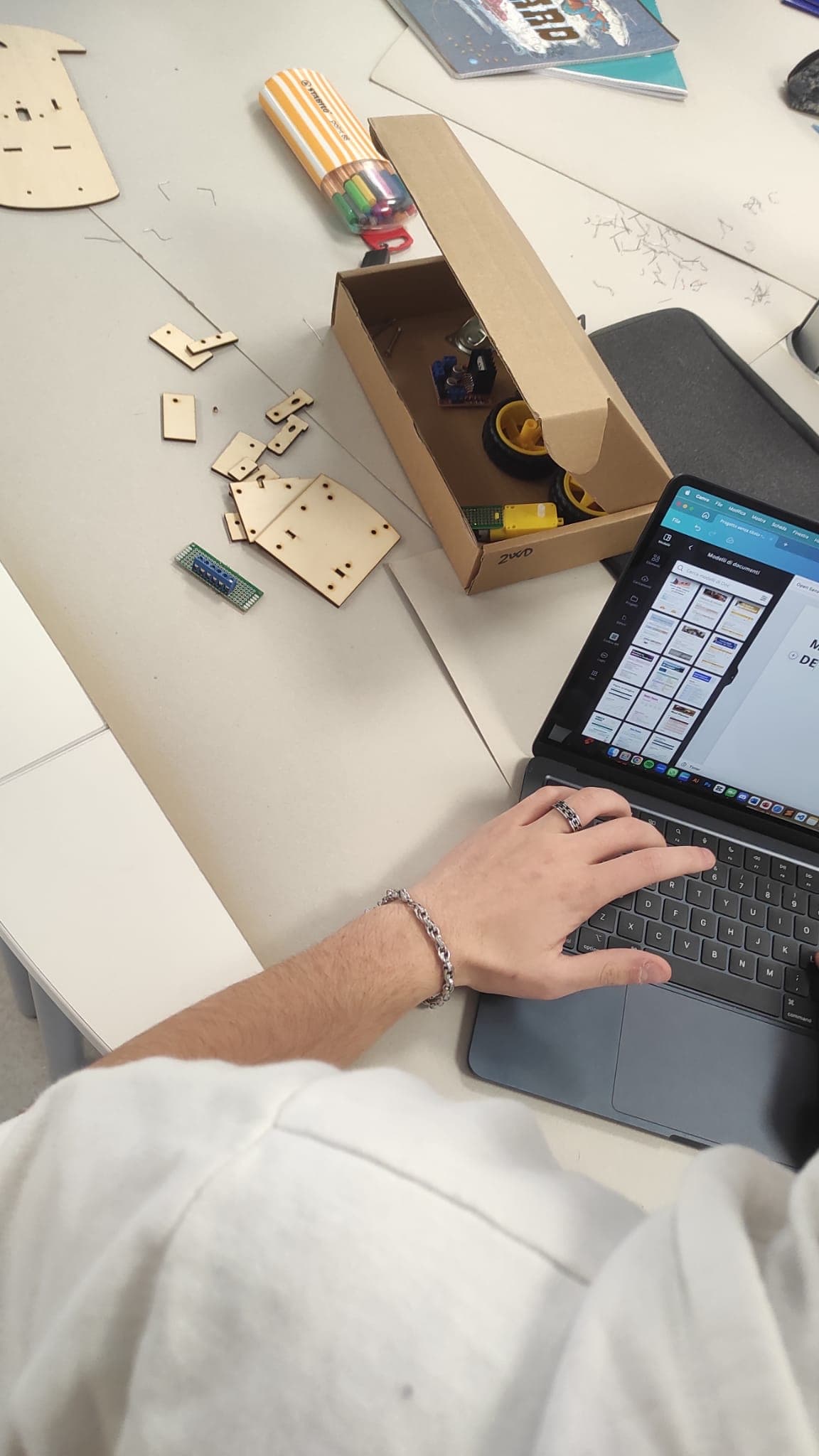
GRADES VI–XIIWEEKLY SESSIONS

Weekly Training

For schools not yet ready to timetable the full year. One session a week on the same platform spine, the same Safety Passport, and the same fortnightly gates — a working entry point that upgrades cleanly into the annual program.

Plan a weekly cohort
At our lab
STUDENTS & SMALL CREWSAT OUR KATHMANDU LAB

In-House Robotics Training

Training at our own lab in Buddhanagar, for students whose school does not run a program yet and for holiday cohorts. Small crews, full bench and hardware access, and the same Nepal Project Bank builds.

Visit the lab
THREE BANDS, ONE LAB

Same rhythm, differentiated by grade.

Every grade follows the same four-term topic rhythm, differentiated across three bands so one lab and one instructor team can serve the whole school.

Band AGRADES VI–VII

Foundation & Building

micro:bit & Scratch → Arduino Uno with C
  • Concrete, visual, game-based activities; block coding first, then first C sketches
  • Pre-assembled kits, guided worksheets, short project cycles with achievable milestones
  • Assessed on participation, safe practice, and basic comprehension
DRONE LAYER

Observation, glider physics, and simulator only — no physical flight.

Band BGRADES VIII–IX

Integration & Smart Systems

ESP32 & IoT
  • Multi-sensor systems, displays, Bluetooth robotics, one mastered IoT dashboard
  • First real AI: datasets, train/test splits, object classifiers
  • GitHub portfolio begins in Grade VIII; peer code review built into the lesson structure
DRONE LAYER

Bench assembly with propellers off (VIII); supervised tethered and indoor micro-drone flights after the Pre-Flight Stamp (IX).

Band CGRADES XI–XII

Mastery, AI & Autonomy

Python, Raspberry Pi & machine learning
  • Professional toolchain: Python, data analysis, scikit-learn on offline Nepali datasets, Raspberry Pi edge AI
  • Front-loaded workload to respect the NEB board-exam season
  • Grade XII delivers a capstone, an ethics review, and a startup-style pitch; seniors mentor junior teams
DRONE LAYER

Flight-control theory (IMU, PID), autonomy concepts, and aerial data for survey, agriculture, and disaster response.

GRADE X — Grade X sits out the assessed pathway for SEE. Those students may join the voluntary Robotics Club with no assessment load, and rejoin the programme in Grade XI.

THE 40-WEEK YEAR

Foundations to autonomy, in four terms.

Forty teaching weeks mapped onto the Nepali academic calendar, with buffer weeks already deducted for Dashain–Tihar, terminal exams, and school events — so the plan survives contact with a real school year.

HOW WE TEACH IT

Spiral, not linear

Signature projects — the traffic light, the obstacle robot — recur in more advanced form each grade, so students see their own growth. Grade IX closes the loop with a growth talk: the same project, four ways, VI to IX.

Safety Passport first

Every student passes the Safety Passport and signs the Lab Safety Agreement before touching a powered tool, soldering iron, LiPo battery, or drone. Renewed every year, no exceptions.

Every project is a Nepal project

Air quality, khanepani, landslides, earthquakes, floods, terrace agriculture, tourism. The same hardware as a generic kit, aimed at work a school board and a journalist actually care about.

Offline by design

Every cloud tool has a taught offline fallback — local server, serial and SD logging, downloaded datasets. A bad internet day never cancels a session.

Fortnightly gates, not weekly grades

Thirty students on weekly practicals in a 60–90 minute session does not compute. Assessment runs on fortnightly gates, with peer checklists keeping accountability in between.

Objects, never faces

No project stores biometric data or points a camera at a classmate. Vision work uses objects, plants, and waste categories — per the Individual Privacy Act 2075.

THE NEPAL PROJECT BANK

Same hardware. Work that matters here.

Exhibition projects are drawn from the Nepal Project Bank — the same components as a generic kit, pointed at problems a school board, a parent, or a journalist actually cares about.

ProjectGradeNepal relevance
Kathmandu Air Quality MonitorVIIIValley winter air pollution
Khanepani Tank Level AlarmVIIHousehold water-supply management
Landslide Soil-Moisture SentinelIX / XIIMonsoon-prone hill districts
Earthquake Alert NodeIX / XIPost-2072 preparedness
Flood Early-Warning ModelIX / XIITerai river communities
Terrace-Farm Smart IrrigationVIII / XIIHill-agriculture water efficiency
Micro-Hydropower Working ModelVII / VIIINepal's energy backbone
Crop-Disease Image ClassifierXI / XIISmallholder agriculture
Waste-Sorting AssistantVIII / XIIMunicipal waste segregation
Trekking-Route Weather NodeIX / XITourism-economy safety
HOW STUDENTS ARE ASSESSED

Graded like engineering, not like a quiz.

Technical competence, plus teamwork, communication, safe practice, and the ability to document and justify a design decision.

Practical Skills

40%

Fortnightly gate checks + peer checklists between gates

Projects

20%

Term projects and flagships scored on the standard rubric

Theory

15%

Short term-end written checks aligned to units

Innovation

15%

Original improvements, problem-solving, capstone ambition

Presentation & Portfolio

10%

Expo and viva performance + GitHub portfolio (VIII+)

  • 7.1

    Progress reports are issued at every mid-term and at the end of each academic term.

  • 7.2

    Mid-pathway joiners get a Week-1 diagnostic and a Catch-Up Pack — three guided worksheets, two open-lab buffer sessions, and a lab buddy — then are assessed on the same rubric by the Term 1 gate.

  • 7.3

    Unused buffer weeks convert to catch-up labs or competition practice.

SAFETY, ETHICS & PRIVACY

Nobody touches a powered tool without the passport.

Every student passes the Safety Passport and signs the Lab Safety Agreement before their first practical session, and renews it every year.

DC only, never mains

Lab work is restricted to 3.3V–12V DC. Lab circuits are never connected to 230V AC mains. Instructor supervision is required for soldering or any supply above 12V.

LiPo discipline

Batteries charge only in charging bags under instructor supervision, with a storage-charge policy enforced. Damaged or swollen cells are quarantined immediately.

Flight rules

Propeller guards are mandatory. Flights are indoor or tethered in marked zones only, the instructor is pilot-in-command, and a signed pre-flight checklist is filed every session. Grades VI–VII never fly physical aircraft.

Privacy Act 2075

No project stores student biometric data or points cameras at classmates. Vision work uses objects, plants, and waste categories, with consent forms for any human-subject demonstration.

BEYOND THE TIMETABLE

Annual Robotics & Innovation Expo

Held at year end in Chaitra, open to students, parents, and invited guests including local media. Each team of four to six students presents a working project from the academic year, and Grade IX teams deliver the spiral growth talk.

AWARD CATEGORIES
  • Best Innovation
  • Best Presentation
  • Best Junior Project
  • Best Nepal-Impact Project
THE CLUB YEAR — MONTHLY
BaishakhClub launch + robotics drawing & design contest
JesthaCoding challenge, grade-banded
AsharMini project exhibition
ShrawanRobot race — line follower and obstacle
BhadraSTEM quiz
Ashwin–KartikDashain–Tihar home design challenge
MangsirInnovation fair
PoushSimulator Cup — drone simulator missions
MaghInter-house robotics contest
FalgunInter-school robotics & innovation contest
ChaitraAnnual Robotics & Innovation Expo
Academic year 2083

Bring the program to your school.

Tell us the grade levels you want to cover and whether you are starting with weekly sessions or timetabling the full year. We will send the lesson plan, the hardware list, and the safety requirements for your lab.

GROBOTICS PVT. LTD. · BUDDHANAGAR, KATHMANDU